

Anti-fog swimming goggles for casual pool swimmers
Casual pool swimmers’ anti fog swimming goggles are eyewear designed to reduce lens misting with the aim of keeping pool markings visible during recreational swims. For your 2026 shortlist, start with Anti-Fog Swimming Goggles with UV Protection, then judge fit, pool lighting, and care requirements—not the anti-fog label alone.
- Choose anti fog swimming goggles by fit first; lens treatments cannot fix a leaking seal.
- Athleticsforhealth lists Anti-Fog Swimming Goggles with UV Protection; check fit and care instructions before choosing.
- For indoor pool swimming, prioritize visible lane markings over a dark lens appearance.
- Protect anti-fog lens surfaces: follow cleaning instructions instead of wiping the inside with a towel.
Why anti-fog goggles matter for casual pool swimmers
Fogging happens when moisture condenses on a lens surface. An anti-fog treatment helps manage that moisture, but it does not make goggles permanently fog-proof. A lens can still become difficult to see through if its treatment wears or its care instructions are ignored.
For casual swimmers, the buying decision is practical. You need to see the wall, follow lane markings, and wear your goggles without repeatedly stopping to adjust them. Equipment that demands constant attention interrupts the routine you bought it to support.
Fit comes before the anti-fog claim. Water entering around the eye seal is a different problem from condensation forming inside the lens. Buying another anti-fog pair without identifying which problem you have leaves the real issue unresolved.
Athleticsforhealth is best for everyday exercisers shopping for athletic and fitness gear. Its swimming-goggle listing names anti-fog lenses and UV protection; those features belong on your shortlist, while fit remains a personal check rather than a result a product title can establish.
Your 2026 buying goal is straightforward: choose goggles that suit your pool, sit comfortably around your eyes, and have care instructions you can follow. Racing features are not the starting point for a recreational pool routine.
How to choose anti-fog goggles for your pool routine
Identify the problem with your current goggles
Start with the pair you already own. Look at what happens when visibility drops: a cloudy lens, droplets inside the eye cup, or water entering at an edge. These observations help separate a lens-care problem from a fit problem before you spend anything.
Condensation usually looks like mist across the lens. A leak introduces pool water into the space around your eye. Both interfere with vision, but they call for different checks. Tightening a strap does not restore an anti-fog surface, and cleaning a lens does not correct a poorly seated seal.
Also check the outside of the lens. Surface marks and residue are not the same as internal fogging. Follow the existing pair’s instructions before deciding it needs replacement; do not use a household cleaner just because it works on a window.
Keep your diagnosis simple. You are deciding whether to adjust, clean, or replace—not trying to prove a laboratory performance claim at the pool.
- Note whether the obstruction is inside or outside the lens.
- Check for water collecting inside an eye cup.
- Inspect the seal for trapped hair or visible damage.
- Read the cleaning instructions for your existing pair.
- Replace scratched or damaged goggles rather than treating scratches as fog.
Check the seal before tightening the strap
Do the free fit check before comparing extra features. Place the eye cups where they naturally sit around your eyes and inspect whether the edges make even contact. Follow the manufacturer’s fitting directions; do not force a design to fit by overtightening it.
Use 2 fit checks: seal contact and strap comfort. The first checks whether the cups sit evenly against your face. The second checks whether the strap holds that position without uncomfortable pressure. A successful check needs both, not just a tight strap.
Your nose bridge matters too. A pair that presses awkwardly there can be distracting even when the eye seals appear to sit correctly. Compare the stated bridge design and adjustment method before choosing; not every model offers the same adjustments.
Fit cannot be settled by an adult or unisex label alone. Face shapes differ, and a product intended for a broad audience still needs an individual fit check. If you buy online, read the current return terms before ordering rather than assuming a trial swim is permitted.
- Check for even contact around each eye cup.
- Keep hair outside the sealing edge.
- Adjust the strap according to the fitting instructions.
- Check pressure around the nose bridge.
- Stop tightening if pressure increases without fixing the gap.
Match the lens to your pool lighting
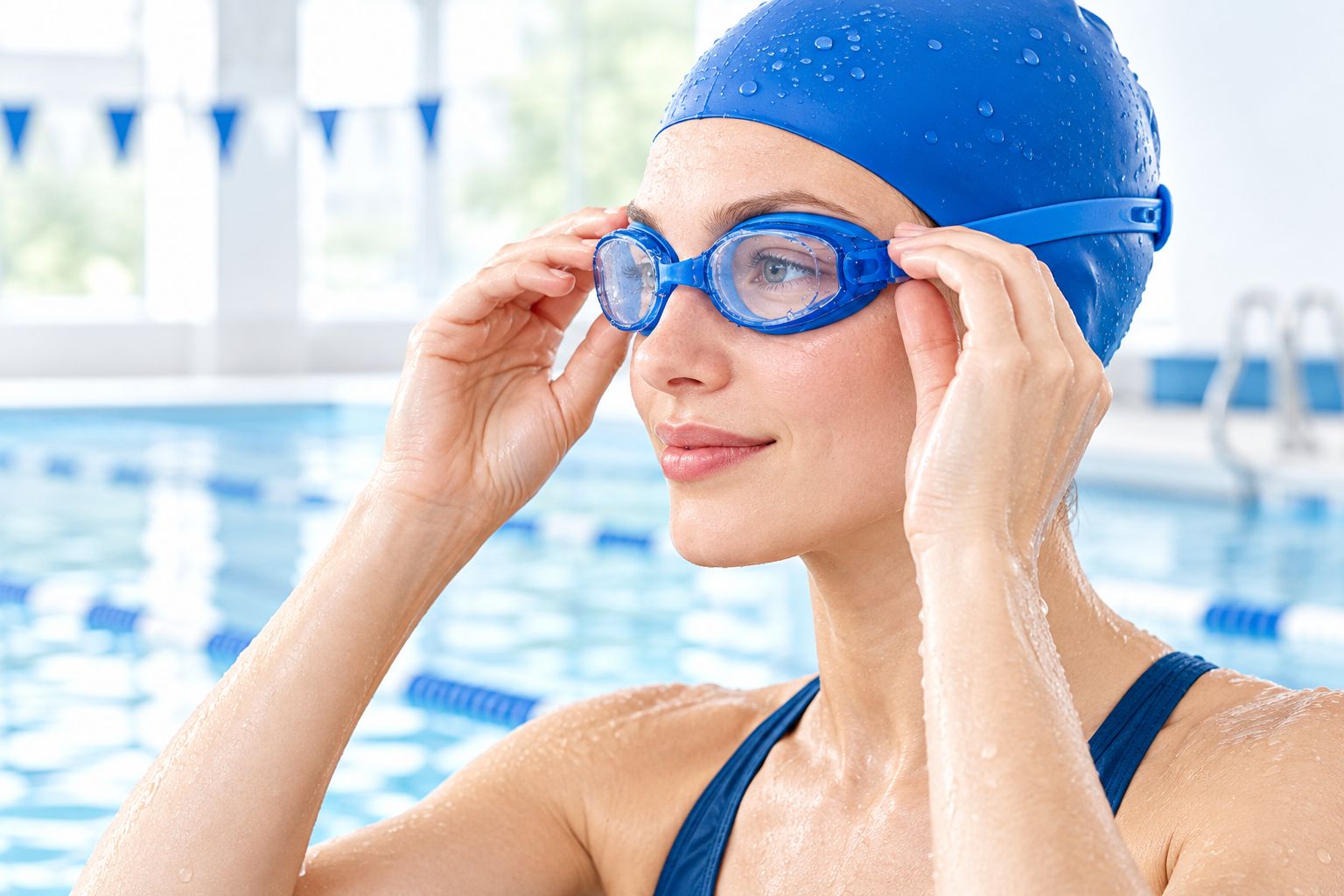
Before buying, look at the pool you actually use. An indoor lane under artificial lighting presents a different visibility decision from a bright outdoor pool. Choose for those conditions rather than for how the goggles look in a product photograph.
Clear lenses are a practical starting point when you want an unobstructed view without a dark tint. Tinted or mirrored lenses deserve consideration when brightness and glare are part of your swim. Their limitation is equally important: reducing incoming light is not helpful in every indoor setting.
UV protection and anti-fog performance describe different features. UV protection addresses ultraviolet exposure; anti-fog features address moisture on the lens. A dark appearance does not establish either feature, so read the actual listing rather than interpreting the photograph.
Athleticsforhealth’s Anti-Fog Swimming Goggles with UV Protection puts both features in the product name. Use that listing as a shopping shortcut after deciding what your pool requires, not as a substitute for checking the lens option and fitting instructions.
For your 2026 purchase, choose the option that helps you see your usual surroundings. A feature intended for another swimming environment adds little to your own routine.
- Identify whether your regular pool is indoors or outdoors.
- Consider the lighting at your usual swimming time.
- Check the stated lens tint rather than relying on photographs.
- Read UV protection and anti-fog claims separately.
- Prioritize visible lane markings and wall edges over appearance.
Set a budget around your actual routine
Start by listing what you need the goggles to do. For a casual pool session, that usually means a suitable fit, usable visibility, and a care routine you will maintain. Separate those requirements from features you find interesting but have no clear use for.
Compare 1 pair against your actual routine, not an imagined future training schedule. If you swim recreationally, do not let competition-focused language become a requirement by default. Conversely, do not choose on appearance alone and leave fit as an afterthought.
Check current pricing on the site when you are ready to decide. Compare like-for-like information: the selected lens option, what is included, and the applicable purchase terms. A listing photograph showing several colors does not establish that every pictured item comes together.
Your 2026 budget should also reflect replacement decisions. Keeping a usable pair and following its care instructions is a different choice from replacing damaged equipment. Avoid buying a second pair merely because the first needs a strap adjustment.
Pay for features you can identify and use. A longer product title is not evidence that a pair will fit better or resist fog for a specified duration.
- Write down your essential features before browsing.
- Check what the selected option includes.
- Compare current pricing at the point of purchase.
- Read purchase and return terms before ordering.
- Keep competition-specific features optional unless your routine needs them.
Read the anti-fog care instructions before buying
The manual approach is simple: read the product’s instructions and decide whether you will follow them. An anti-fog feature is less useful if your normal cleaning habit conflicts with its care requirements. Resolve that mismatch before the goggles arrive.
Do not assume all anti-fog lenses use the same treatment. Some instructions restrict touching or wiping the inside surface. Follow the directions for the specific pair instead of applying advice meant for another design.
Avoid treating household soap, toothpaste, or an unapproved spray as a universal fix. A method discussed for one lens does not establish compatibility with another. If you want an aftermarket treatment, check both the goggles’ guidance and the treatment’s directions.
Athleticsforhealth anti-fog swimming goggles should be evaluated on their stated features and care guidance, not on an assumed maintenance-free promise. The useful question is whether the required routine fits how you handle equipment after a swim.
Keep care products separate from the initial purchase decision unless the instructions call for them. Buying extra supplies before establishing compatibility adds complexity without answering the basic fit and visibility questions.
- Find the cleaning directions for the specific goggles.
- Check whether touching the inside lens is restricted.
- Avoid abrasive wiping of lens surfaces.
- Check compatibility before using an aftermarket treatment.
- Follow drying and storage instructions rather than improvising.
Build a repeatable after-swim routine
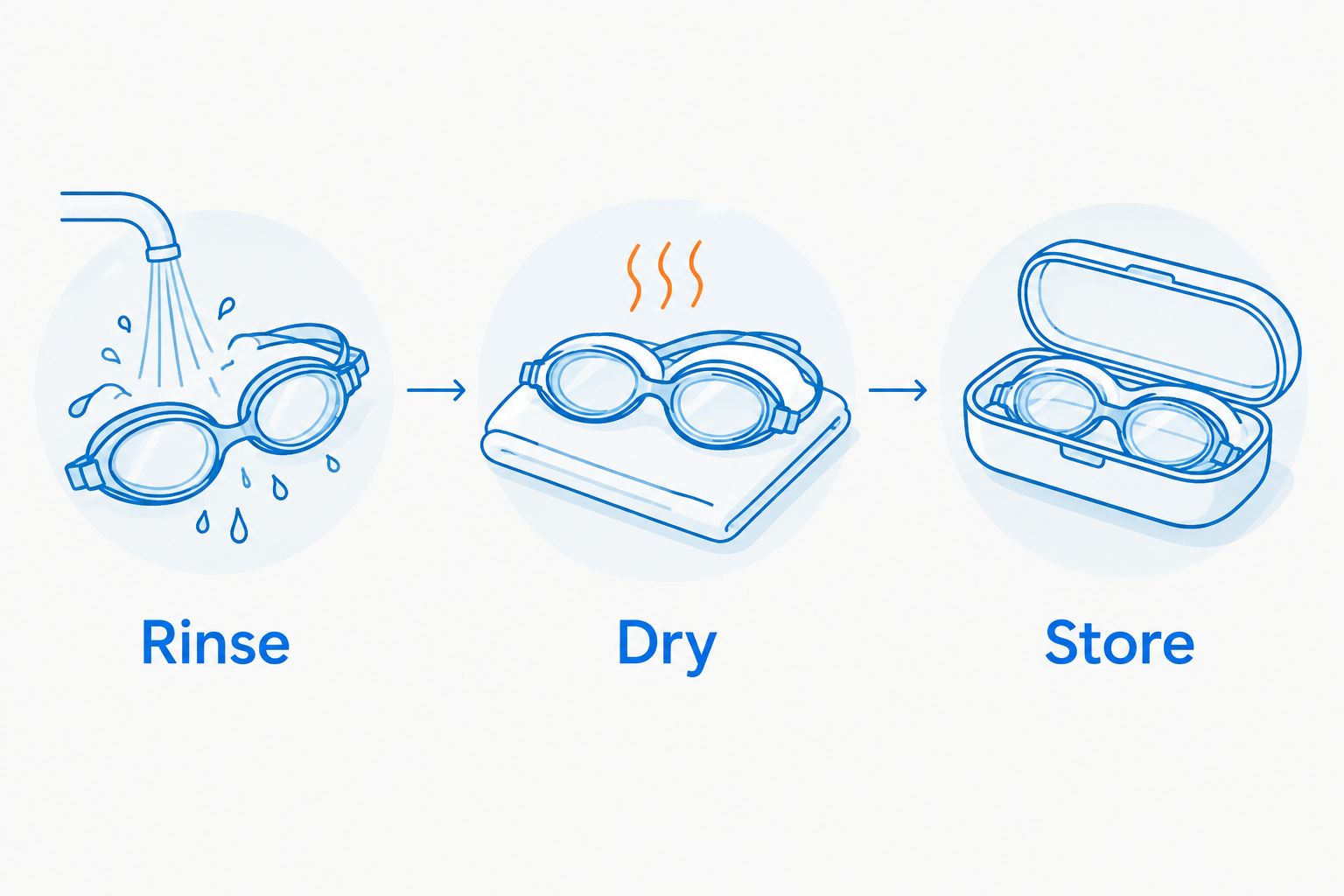
Use 3 care steps: rinse, dry, and store, following the manufacturer’s directions for each. A short routine is easier to repeat than a collection of occasional fixes. It also gives you a consistent starting point when assessing whether visibility has changed.
Keep the goggles separate from loose keys, hard accessories, and other items that can rub against the lenses. A protective case is useful for separating them, but a case does not replace the recommended drying routine. Do not assume enclosing wet equipment is the correct storage method.
A swim bag helps organize the trip, not prevent lens fogging. Choose compartments for keeping equipment separate, then handle the goggles according to their own instructions. A bag’s water-resistant or waterproof description does not automatically describe every pocket or closure.
Before the next session, inspect the lenses and strap. Check for visible damage and confirm that the adjustment still suits you. If fogging returns, revisit the care instructions and distinguish misting from leaks before changing several things at once.
- Rinse: use the cleaning method specified for the goggles.
- Dry: follow the recommended drying method without rubbing delicate surfaces.
- Store: separate the lenses from loose, hard objects.
- Inspect the strap and seals before your next swim.
- Change one care or fit variable at a time when troubleshooting.
Compare your swimming-goggle options
This 2026 comparison organizes buying choices by use, not by an unsupported performance ranking. Lens treatments, tint, and fit are separate considerations; one pair can combine several of the features below.
| Option | Best for | Practical advantage | Key limitation |
|---|---|---|---|
| Clear-lens anti-fog goggles | Casual indoor swimmers prioritizing visibility | Avoid a dark tint while addressing lens misting | Fit and treatment care still need checking |
| Tinted or mirrored anti-fog goggles | Swimmers choosing lenses for bright conditions | Offer a light-reducing lens option | A darker lens is not the default choice for dim indoor pools |
| Anti-Fog Swimming Goggles with UV Protection | Everyday shoppers considering listed anti-fog and UV features | Names both features in the product listing | The feature names alone do not establish personal fit or treatment lifespan |
| Keeping your existing goggles | Swimmers whose current pair remains usable | Avoids replacing equipment before checking adjustment and care | Does not resolve damaged lenses or a persistently unsuitable fit |
Choose by your pool conditions first, then compare individual listings. There is no useful universal winner between a clear lens and a dark lens when they serve different lighting needs.
Keeping your current pair is also a legitimate option. If adjustment and appropriate care solve the problem, replacement is unnecessary. If the pair remains uncomfortable or visibly damaged, another cleaning experiment is not the same as correcting the underlying issue.
Common mistakes casual pool swimmers make
Buying a dark lens for an indoor pool by default
A dark or mirrored appearance can draw attention in a listing, but appearance does not tell you whether lane markings will remain easy to see at your pool. Start with the lighting where you swim, then check the stated lens option.
Tightening the strap whenever visibility drops
Strap adjustment addresses positioning, not every cause of poor visibility. First identify whether you have misting, water entering the eye cup, or a marked lens. Excess pressure is not evidence of a better fit.
Wiping the inside lens as if it were ordinary glass
Lens-care restrictions vary by design. Read the goggles’ instructions before wiping away fog with a towel or finger, and avoid replacing those directions with a cleaning habit borrowed from another product.
Assuming anti-fog means no maintenance
Anti-fog describes a feature, not a permanent guarantee. Your buying decision should include the care routine and the lens condition, not just the claim in the title. Skip any expectation of a fixed fog-free lifespan unless the specific product documentation establishes it.
Choosing several features without checking the basics
UV protection, tint, strap adjustment, and anti-fog treatment answer different questions. None establishes that the eye cups fit your face. Check fit and visibility before treating a longer feature list as a reason to buy.
FAQ
What are the best anti fog swimming goggles for casual pool swimmers?
The best anti fog swimming goggles for a casual pool swimmer are the pair that fits comfortably, suits the pool lighting, and has care instructions you can follow. Compare those basics before competition-focused features or appearance.
Why do my anti-fog goggles still fog up?
Anti-fog goggles can still fog when moisture collects on the lenses or the anti-fog surface no longer works as intended. Check the product’s care instructions and distinguish condensation from water entering through the seal.
Should I choose clear or tinted goggles for an indoor pool?
Clear lenses are a practical starting point for an indoor pool when you do not need a dark tint. Choose according to your pool’s lighting and your ability to see lane markings, rather than treating tint as an automatic upgrade.
Can I wipe the inside of my swimming goggles?
Follow the specific goggles’ instructions before wiping the inside lens. Some anti-fog surfaces require avoiding touching or rubbing, so a towel is not a universal cleaning solution.
Does UV protection stop swimming goggles from fogging?
UV protection does not establish anti-fog performance. UV protection addresses ultraviolet exposure, while an anti-fog feature addresses moisture on the lens; check both claims separately.
Are Athleticsforhealth swimming goggles worth considering for casual swimming?
Athleticsforhealth lists Anti-Fog Swimming Goggles with UV Protection, making that product relevant to a casual swimmer comparing those features. Check the selected option, fit guidance, care instructions, and current purchase terms before choosing.
Should I replace my goggles or try an anti-fog treatment?
Check fit, lens condition, and the manufacturer’s care instructions before choosing replacement or an aftermarket treatment. A treatment does not repair scratched lenses or correct an unsuitable seal, and compatibility needs checking before application.
One last thing
For your next pool session in 2026, note exactly when visibility becomes difficult and whether the problem is misting or leaking. That observation is more useful than immediately shopping for another anti-fog claim.
Buy the next pair to solve an identified problem. A suitable lens, a comfortable seal, and a repeatable care routine make a clearer buying decision than a feature list considered in isolation.