

Gym duffel bags for weekend trips: a packing guide
Weekend travelers’ gym duffel bag packing is the process of organizing workout gear and overnight essentials in one bag so you can travel without carrying a separate gym kit. This 2026 guide helps you choose a bag, separate shoes from clothing, and pack around the activities you actually plan to do.
- Athleticsforhealth gym duffel bag options suit everyday exercisers combining workouts with short trips.
- Choose a shoe pocket when keeping footwear separate matters more than an open main compartment.
- Pack weekend essentials first; add fitness gear only for workouts you have planned.
- Check bag dimensions and carrier rules before treating any gym bag as cabin luggage.
Why gym duffel bag packing matters for weekend travelers
A weekend bag has to handle more than a change of workout clothes. You need access to travel essentials, somewhere to put used clothing, and enough room for the outfits you will wear away from the gym. Packing everything loose makes those jobs harder.
Athleticsforhealth gym bags are best for everyday exercisers choosing one bag for workouts and short trips. The Athleticsforhealth storefront includes bags described for gym use and weekend travel; choose between them by packing needs rather than the name alone.
For your 2026 travel plans, start with the itinerary. A weekend with a swim session needs different packing decisions from a weekend with a hotel workout. Neither needs every piece of equipment you use at home.
The useful question is not whether a duffel looks spacious. It is whether your shoes, clothes, toiletries, and workout kit fit together without blocking the opening or making the bag awkward to carry.
Build your 2026 weekend packing plan
Use the steps below before choosing a bag. An existing duffel and a few separate pouches are enough to test the arrangement; buy a new bag only when the test exposes a specific problem.
1. Match your packing list to the itinerary
Write down where you are going, what you will wear, and which workouts you have scheduled. For an example trip lasting 2 nights, build your list around the actual overnight stays rather than filling the bag because room remains.
Lay everything out before packing. This gives you a clear view of bulky items and duplicate clothing. Check whether the destination provides equipment you intend to use, but confirm that directly rather than assuming every accommodation has a gym.
If your plans include dinner, a walk, and a workout, look for clothing that works across those activities. Reusing a suitable layer is a packing decision, not a reason to skip a fresh change after exercising.
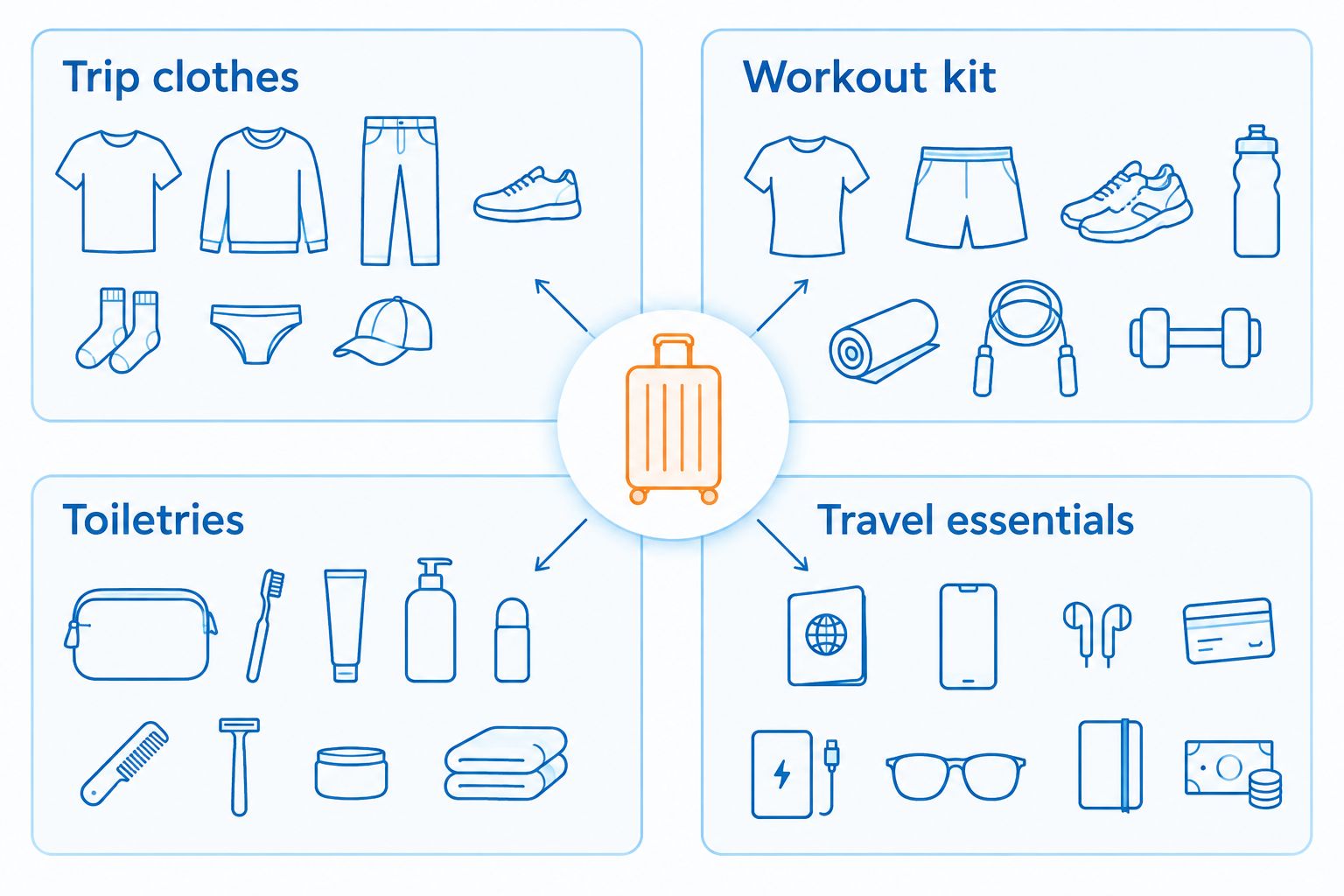
Sort the layout into these groups:
- Trip clothes: choose outfits for the activities on your itinerary.
- Workout kit: include clothing and equipment for scheduled exercise.
- Toiletries: set aside washing supplies and any leak-prone containers.
- Travel essentials: keep identification, keys, chargers, and booking details together.
2. Test the load before choosing the bag
Pack your existing bag with the items from your layout. Close it normally, lift it, and carry it through the space you will use to leave home. A bag that closes only when you compress everything is not a useful fit for that load.
Measure the packed bag if you need it to fit a particular storage space. Measure the outside, including any protruding pockets, rather than relying on how large the empty main compartment looks.
For air travel, check your carrier’s current baggage rules for your booking. A bag marketed for travel is not automatically accepted as a personal item or cabin bag. For road travel, check the space where you intend to store it and whether you can retrieve it without unloading everything else.
Use this test to identify the purchase you actually need:
- Check whether the zipper closes without pulling hard on the fabric.
- Lift the bag using the handles you expect to use.
- Test any shoulder strap with your planned load.
- Measure the packed exterior against your transport requirements.
- Remove duplicate items before deciding you need more capacity.
3. Choose organization that solves your packing problem
Start with separate pouches or clean bags inside your current duffel. They let you group toiletries, footwear, and small essentials without replacing the whole bag. This manual setup also shows which compartments you would use in a new bag.
A dedicated shoe pocket offers a simpler place to put footwear. Its trade-off is space: the shoes still occupy part of the bag’s overall packing volume. Check that the pocket suits your actual footwear rather than assuming any shoe will fit.
Athleticsforhealth offers a shoe-pocket bag and a gym-and-travel duffel. Compare those options after deciding whether your main problem is footwear separation or organizing a general weekend load. Neither choice removes the need to contain toiletries or manage used clothing.
Keep the selection focused:
- Choose a shoe pocket if footwear separation is a priority.
- Choose an open layout if you prefer removable organizers.
- Check how you reach small essentials without unpacking clothes.
- Examine closure and strap details in the current listing.
- Avoid treating a waterproof description as proof of sealed seams or zippers.
4. Pack footwear and clothing as separate groups
For a light weekend itinerary, consider whether 1 pair of packed shoes, plus the pair you wear, covers your plans. This is a suggested packing limit, not a rule. A trip with different activities can justify additional footwear, but each pair needs space in your test load.
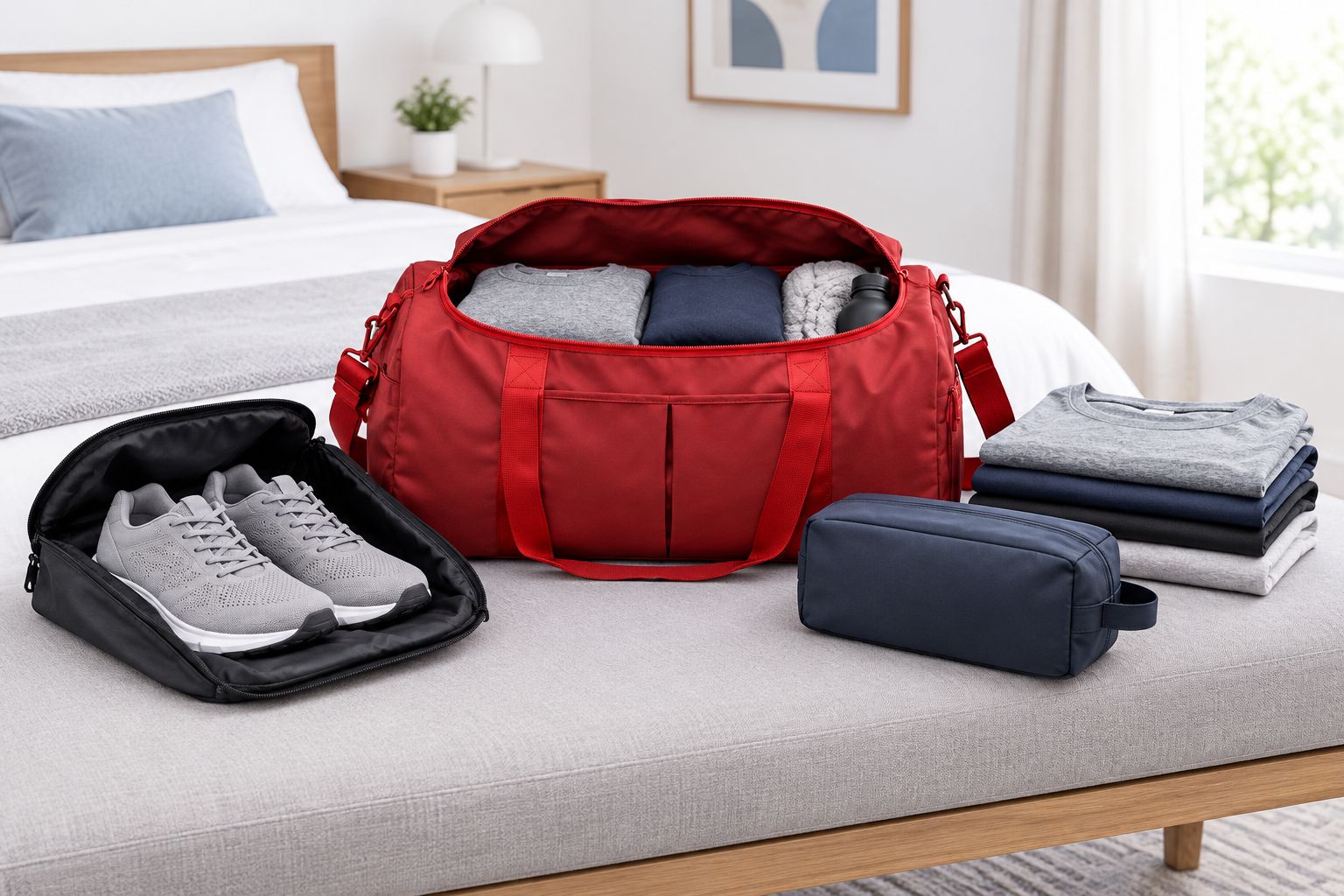
Place footwear in the shoe pocket or a separate shoe bag. Keep it away from clean garments and toiletries. Do not force bulky shoes into a compartment that distorts the bag or makes the closure difficult to use.
Group clothing by use so you can find a fresh outfit without emptying everything. If you plan 2 workout outfits, pack them as distinct sets rather than scattering tops and socks through the main compartment. Fold or roll according to the garments; neither method fixes an overloaded bag.
Finish the clothing arrangement with these checks:
- Put footwear in its designated pocket or separate pouch.
- Group workout tops, bottoms, and socks together.
- Keep your next change of clothes easy to reach.
- Set aside a separate container for used garments.
- Leave room to return items without recreating a perfect packing layout.
5. Contain toiletries and plan for used gear
Use a separate toiletry pouch and check every lid before departure. Keep liquids away from clothing and travel documents. A waterproof bag description does not mean an internal spill will leave the contents dry.
Make a plan for the return journey before the first workout. Used gym clothes, damp swimwear, and a wet towel should not go straight back among clean clothing. A separate pouch helps contain them during transport, but it does not dry them.
After a swim or workout, take damp items out when you have somewhere suitable to dry them. Follow each item’s care instructions. Do not leave damp gear sealed inside your weekend bag between trips.
Prepare the return load with these tactics:
- Check bottle caps and closures before packing.
- Keep toiletries together in a separate pouch.
- Reserve a container for used workout clothing.
- Separate damp swimwear from dry garments.
- Unpack damp items promptly at your destination or home.
6. Add only the fitness gear your workout requires
Review the planned session before adding accessories. A bodyweight routine does not require you to transport your home setup. If a workout needs specific equipment, confirm whether you will have access to it at the destination or whether it belongs in your bag.
Pack the workout clothing first. Then add accessories only when they have a clear role. Small items can still create clutter, especially when loose cords, straps, or goggles catch on clothing during unpacking.
Before leaving, load the bag as you will carry it. Keep hard or awkward items away from the side that rests against your body. Place frequently used essentials where you can reach them without opening every clothing group.
Close the packing process with a final check:
- Remove equipment that has no role in the planned workout.
- Keep small accessories together in a pouch.
- Check that hard items do not press against your body.
- Put keys and travel essentials within easy reach.
- Confirm the bag closes and carries comfortably with everything inside.
Compare weekend gym bags for 2026
Choose organization first, then compare the bag. Both options below are described for workouts and short travel. The useful distinction is the explicitly listed shoe pocket, not an assumed difference in capacity or durability.
| Option | Best for | Listed feature | Key limitation or buying check |
|---|---|---|---|
| Waterproof Gym Bag with Shoe Pocket | Exercisers who want footwear separated within the bag | Waterproof nylon and a separate shoe pocket | Footwear takes packing space; check the pocket against your shoes. |
| Waterproof Gym & Travel Duffel Bag | Exercisers comparing a duffel for gym trips, swimming, and short travel | Oxford cloth construction | Verify the compartment layout and packed dimensions against your itinerary. |
| Existing duffel with separate pouches | Travelers whose current bag already fits their load | Organization you arrange yourself | You must manage the pouches rather than rely on dedicated compartments. |
For the shoe-pocket option, the practical benefit is having a defined place for footwear. The limitation is that the compartment does not make the shoes occupy less room. For the gym-and-travel option, the stated uses match a mixed itinerary, but those uses alone do not establish how your particular load will fit.


If your budget is the deciding factor, compare the current listing details before purchasing. Do not pay for compartments you will not use, and do not replace a suitable existing bag just because it lacks a travel label. The packing test gives you a reason to buy—or a reason to keep what you have.
Common mistakes weekend travelers make
Buying capacity before building a packing list
An empty bag cannot tell you whether your weekend load fits. Shoes, outerwear, and toiletries create a different load from folded gym clothes alone. Build the list, test the load, then choose the bag. That order keeps the purchase tied to your routine.
Treating a shoe pocket as extra capacity
A shoe compartment separates footwear; it does not erase the space footwear takes. Pack your shoes before judging the remaining clothing room. If you regularly travel with bulky footwear, check its fit directly rather than choosing by compartment count.
Assuming waterproof means everything stays dry
A waterproof material description is not the same as a verified claim about every seam and closure. It also does not protect clean clothes from a leaking bottle inside the bag. Contain liquids separately and follow the bag’s care guidance instead of relying on the product name.
Packing for workouts that are not on the itinerary
Extra workout clothing and accessories compete with overnight essentials. Choose the sessions you intend to do and pack for those sessions. If plans change, a simple workout that uses what you brought is more practical than carrying equipment for every possibility.
Forgetting the return trip
A neatly packed outbound bag changes after you wear the clothes. Keep a way to separate used gear, and leave enough flexibility to repack without forcing the closure. Your return arrangement should work when clothes are no longer folded exactly as they were at home.
FAQ
Can I use a gym duffel bag for a weekend trip?
Yes, a gym duffel bag works for a weekend trip when your overnight essentials and workout kit fit without forcing the closure. Test the complete load and check any transport size restrictions before departure.
What's the best gym duffel bag for someone packing workout shoes?
A bag with a separate shoe pocket is the more direct choice when footwear separation is your priority. The Waterproof Gym Bag with Shoe Pocket lists that feature; check that the compartment fits your actual shoes.
Is a gym bag with a shoe pocket better than an open duffel?
A shoe pocket is better for built-in footwear separation, while an open duffel suits travelers who prefer removable organizers. The better choice depends on your shoes, clothing load, and preferred access.
How many clothes should I pack for a weekend gym trip?
Pack clothing for the overnight stays, planned activities, and workouts on your itinerary. Lay out complete outfits first, then remove duplicates instead of filling every available space.
Can I take a gym duffel bag as airline cabin luggage?
You can take a gym duffel as cabin luggage only when it meets the carrier's rules for your booking. Check the packed exterior dimensions and current baggage requirements; a travel label does not establish acceptance.
Does a waterproof gym bag keep damp swimwear separate?
A waterproof description does not establish that a bag has a separate compartment for damp swimwear. Use a suitable separate pouch and remove damp items when you can dry them.
Which Athleticsforhealth gym bag should I compare for weekend travel?
Compare the Waterproof Gym Bag with Shoe Pocket if separating footwear matters, and the Waterproof Gym & Travel Duffel Bag if you want a duffel described for workouts and short travel. Check the current listings against your packed load before choosing.
One last thing
Pack the return journey before you leave. Put the empty used-clothing pouch inside your bag during the test, then try repacking without carefully rolling every garment. This exposes a packing setup that works only when everything is perfectly arranged.
Use this 2026 checklist to buy around your routine, not around a long feature list. A bag that holds your real weekend load and keeps the essentials accessible is a better choice than one selected for compartments you never use.