

Winter hats with ear flaps for everyday outdoor walks
Everyday walkers’ winter headwear is head covering designed to keep your head and ears covered during outdoor walks. Choose a winter hat with ear flaps that stays over both ears when you turn your head and fits comfortably with your coat collar, glasses, and hood.
- Choose a winter hat with ear flaps for reliable ear coverage, not thickness alone.
- Athleticsforhealth’s knit hat suits everyday walkers seeking built-in ear covers and a visor.
- Compare ear-covering hats, regular beanies, and trapper styles by fit and layering needs.
- Check measurements, fabric details, and care instructions before buying winter headwear.
Why winter headwear matters for everyday walkers
An everyday walking hat needs to work with the clothes you actually wear. A hat that feels comfortable indoors can compete with a raised collar, shift when you look across a road, or feel bulky beneath a hood.
Coverage that stays in place matters more than a hat that merely looks thick. Your ears should remain covered without repeated tugging, and the crown should not slide down into your line of sight. Those are practical buying checks, not promises about a particular temperature rating.
For your 2026 winter wardrobe, start with the coat and accessories you already own. The athletic gear selection at Athleticsforhealth includes a knit hat with built-in ear covers and a visor; decide whether those features match your walking routine before choosing it.
Daily walkers also need an easy transition between outdoors and indoors. If your route includes shops, public transport, or an indoor stop, consider how easily you can remove and carry your hat. A walking accessory should fit the whole outing, not just its coldest stretch.
How to choose a winter hat with ear flaps
Match the hat to your usual walk
Start without buying anything. Put on your current hat and walking coat, then identify the inconvenience you want to fix: exposed ears, a shifting crown, a crowded collar, or an awkward hood fit. Keep that problem separate from features that simply look appealing.
Use 2 walking modes for your comparison: a relaxed stroll and a brisk walk. These are shopping scenarios, not a prescribed exercise routine. If you use both modes, think about whether you want to keep the same headwear on throughout or remove a layer when your pace changes.
Build your 2026 shortlist around three priorities: ear coverage, hood fit, and easy carrying. Decide which matters most before browsing. This keeps a useful feature from being mistaken for an essential one.
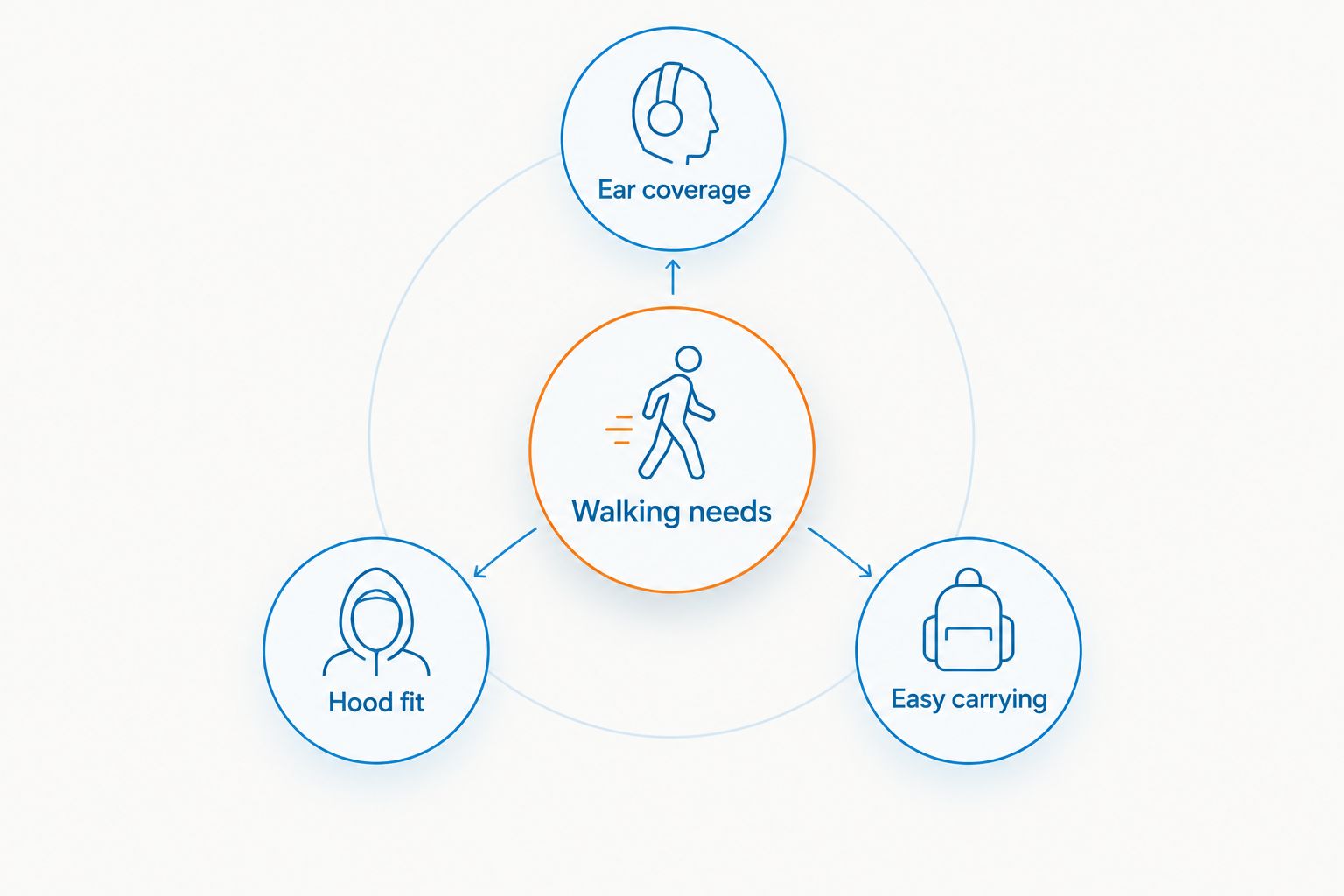
A short checklist gives you a clearer buying decision than a long list of warmth claims. Keep it specific to the route and clothing you use most often.
- Ear coverage: identify where your current hat leaves gaps.
- Hood fit: check whether you normally wear a hood over your hat.
- Easy carrying: consider where the hat goes during indoor stops.
- Note whether you wear glasses, earbuds, or a scarf.
Check ear coverage and crown fit
Use a mirror and your current hat for a free fit check. Look straight ahead, turn your head, and look down. Notice whether the lower edge stays over your ears or pulls upward as the crown moves.
For a new hat, use the seller’s sizing instructions rather than assuming that a stretchy knit fits every head. If the listing gives a circumference range, compare it with a measurement taken in the position the seller specifies. A product name or a men’s label does not replace that check.
Make 3 fit checks part of the decision: full ear coverage, a stable crown, and an unobstructed view. You are checking how the hat sits, not trying to prove a performance claim. If you cannot verify the fit before ordering, review the current return terms before committing.
- Check that the ear covers reach the lower edges of your ears.
- Turn your head and watch for the covers lifting away.
- Look down to see whether the front edge slips toward your eyes.
- Compare your measurement with the listed sizing guidance.
- Reject a fit that needs constant repositioning.
Compare the construction with your needs
First, inspect the hat you already own. Read its fabric label and notice how its shape works with your ears and coat. This gives you a concrete reference when comparing unfamiliar product descriptions.
For a ready-made option, the Men’s Winter Knit Hat with Ear Covers has a thick-knit construction, built-in ear covers, and a visor. Those are the stated features to evaluate. Do not turn the word thick into a temperature guarantee or treat a visor as proof of weather protection.
Athleticsforhealth’s winter hat is best for everyday walkers who want knit construction, built-in ear covers, and a visor. The buying trade-off is straightforward: decide whether you want that combined shape or prefer separate headwear and ear coverage. Check the actual fit rather than assuming the features settle the decision.
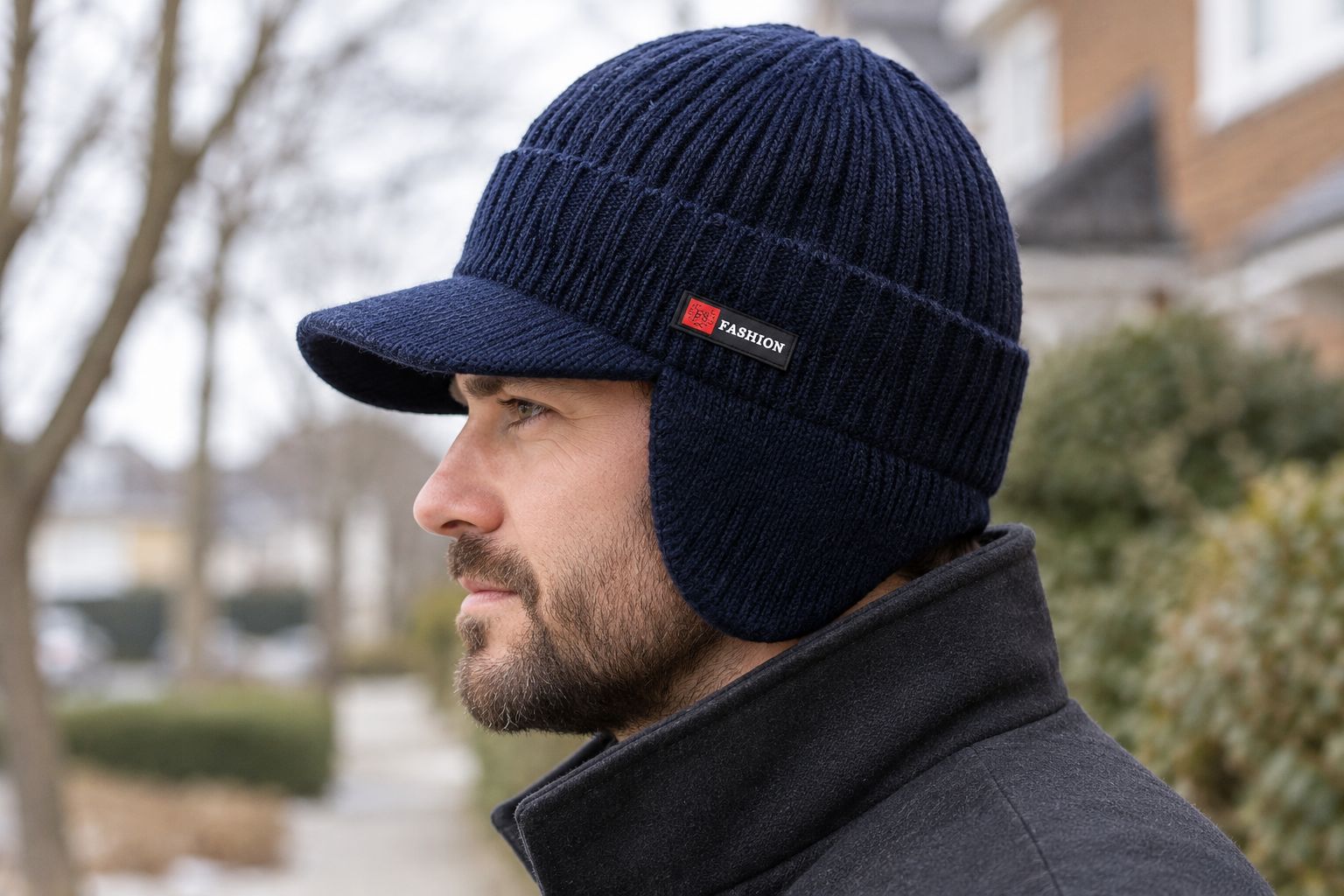
For your 2026 purchase, separate a visible design feature from a verified material specification. A product photograph helps you understand the shape, but the written listing should answer questions about fabric and care.
- Check the fiber composition in the current listing.
- Look for information about lining rather than assuming one is included.
- Decide whether a visor suits your usual walking setup.
- Verify any wind- or water-resistance claim before relying on it.
- Choose built-in ear covers only if their shape meets your coverage needs.
Test the hat with your other layers
Put on your usual coat, scarf, and glasses before deciding what hat shape you need. Raise the collar and hood separately, then together. This simple check shows whether the accessories occupy the same space around your ears and neck.
If you are considering a visor, check how it meets the hood opening. A visor that suits an uncovered head can be inconvenient beneath a closely fitted hood. Likewise, ear covers should not force your glasses into an uncomfortable position.
Do not solve every layering problem by choosing a larger hat. Extra room can change how the crown sits and how securely the ear covers stay in place. Compare the complete outfit instead of judging headwear in isolation.
- Check the hat with your glasses on, if you wear them.
- Raise your coat collar and turn your head.
- Pull your hood up and check the front opening.
- Make sure your scarf does not push the ear covers upward.
- Keep your view clear when looking sideways and down.
Set a budget around useful features
Write down what you need before opening more product pages. For an everyday walker, the purchase should solve a specific gap in the existing outfit. A second hat has little value if it creates the same coverage problem as the first.
Compare current listing prices directly, but do not assume a higher price proves better fit or greater warmth. Fabric, construction, sizing, and care information give you a more useful basis for comparison. If a feature does not serve your route, leave it off your must-have list.
For an affordable 2026 setup, compare keeping your existing headwear with buying a replacement. Athleticsforhealth’s winter hat adds built-in ear covers and a visor as a combined option; choose it only when that design matches the problem you want to solve.
- Set your spending limit before browsing.
- Separate essential coverage from optional styling details.
- Compare the current total purchase cost before ordering.
- Read the current shipping and return terms.
- Keep an existing hat if it already meets your fit and coverage needs.
Check care and carrying before ordering
Look at how you will use the hat between walks. If it needs frequent cleaning, the care instructions should work with your routine. Do not assume every knit hat belongs in the same wash cycle or can go in a dryer.
Consider your carrying arrangement, too. A hat with a visor has a different shape from a plain beanie, so check whether your usual pocket or bag accommodates it without forcing the shape. You do not need a new bag simply because you buy new headwear.
Finish with 4 listing checks: sizing, fabric, care, and construction. These are decision points, not quality certifications. If a detail matters to your purchase, verify it before ordering rather than filling the gap with an assumption.
- Read the washing instructions and drying guidance.
- Check whether the hat’s shape suits your usual carrying space.
- Identify a place to let damp headwear dry according to its care label.
- Keep closures or rough items away from exposed knit when carrying it.
- Confirm the details you need before placing the order.
Compare everyday walking hat options
Choose the style that fixes your actual problem. The comparison below separates design advantages from limitations; none of these options earns a universal warmth ranking from its name alone.
| Option | Best for | Practical advantage | Key limitation |
|---|---|---|---|
| Men’s Winter Knit Hat with Ear Covers | Walkers wanting knit construction, ear covers, and a visor together | The listing specifies those features in one hat | Personal fit and compatibility with your hood still need checking |
| Regular beanie | Walkers whose existing beanie already covers both ears | A simple shape without a visor | Ear coverage depends on its depth and how it sits |
| Trapper-style hat with ear flaps | Walkers seeking a flap-based design | Distinct flaps let you assess the ear-covering shape | Closures, lining, and bulk vary by product |
| Headband or earmuffs | Walkers wanting ear coverage without a covered crown | Keeps head covering and ear covering separate | Does not cover the top of your head |
Keep your existing beanie if it stays over both ears and works with your coat. Choose an ear-covering hat when the existing setup leaves a specific coverage gap. A headband or earmuffs serve a different preference, not the same full-headwear role.
When comparing options for 2026, favor usable information over long product titles. A clear size guide and care label help you make a decision; a list of outdoor activities does not establish suitability for your particular walk.
Common mistakes everyday walkers make
Buying for thickness alone
Thick-looking knit does not tell you whether the hat stays over your ears. Check the shape and sizing first, then evaluate the material details. A bulky hat that repeatedly shifts still misses your main requirement.
Ignoring the coat collar and hood
A hat can fit your head but clash with your walking outfit. Check the whole arrangement before buying, especially around the ears, glasses, and hood opening. Do not judge compatibility from a standalone product photo.
Treating a visor as a weather rating
A visor is a design feature, not proof that the hat resists wind or rain. Read any weather-related claim separately and check what the seller actually specifies. Avoid attaching unstated protection claims to the shape.
Buying a second hat without identifying the gap
Decide what the replacement needs to improve: coverage, stability, layering, or carrying. If you cannot name the problem, compare your current setup again before spending. A different style is not automatically a better walking choice.
FAQ
What’s the best winter hat with ear flaps for everyday walks?
The best winter hat with ear flaps is one that keeps both ears covered while fitting comfortably with your walking layers. Compare sizing, construction, and hood compatibility rather than choosing by thickness alone.
Is a hat with ear flaps better than a regular beanie?
A hat with ear flaps is the better choice when your regular beanie leaves your ears exposed or repeatedly rides upward. Keep the beanie if it already provides stable coverage and works with your coat.
What features does the Men’s Winter Knit Hat with Ear Covers have?
The Men’s Winter Knit Hat with Ear Covers has thick-knit construction, built-in ear covers, and a visor. Check the current listing for sizing, fabric, and care details before buying.
Can I wear a winter hat with ear flaps under a hood?
Choose a winter hat with ear flaps that fits beneath your particular hood without crowding your ears or blocking your view. Check the collar, hood opening, and any visor together rather than assessing the hat alone.
Does a thick-knit winter hat stop wind and rain?
Thick-knit construction alone does not establish wind or water resistance. Rely on specific material and construction information rather than the appearance of the knit.
How do I check whether an ear-flap hat fits?
Check that the crown stays stable, both ears remain covered, and the front edge does not obstruct your view. Compare your measurement with the seller’s sizing instructions and repeat the check with your usual walking layers.
How should I wash a winter walking hat?
Wash a winter walking hat according to its care label. Do not assume all knit fabrics, linings, or visor constructions tolerate the same washing and drying method.
One last thing
Test the hat when you look down, not just when you face a mirror. Everyday walking includes checking your footing and looking sideways. Stable ear coverage during those movements is a more useful buying check than how the hat looks in a still photograph.
Related guides
For other parts of your weekly exercise routine: